
Roscommon County Arrest Records and Court Charges
An arrest record is the law enforcement account of a person being taken into custody. In Roscommon County, that record starts with the arresting agency, usually the Sheriff's Office or a local police department. It notes who was booked, the arrest date, the arresting agency, and the booking charges. Booking charges are the officer's first reason for the arrest. They are not the final word. The Prosecuting Attorney reviews the arrest and decides which formal charges, if any, to file with the court.
The court charge record is the second file, and it is the one that drives the case. Once the prosecutor files charges, they enter the court system and get tracked through every hearing. The arrest and booking side stays with the sheriff, and the jail roster and booking detail are covered on the Roscommon County inmate records page. The court charge side, the charges after arrest, moves through the District or Circuit Court. The full case file, with pleas and the final outcome, sits in the criminal court records.
The county's official Prosecuting Attorney page explains who reviews arrests and files charges.
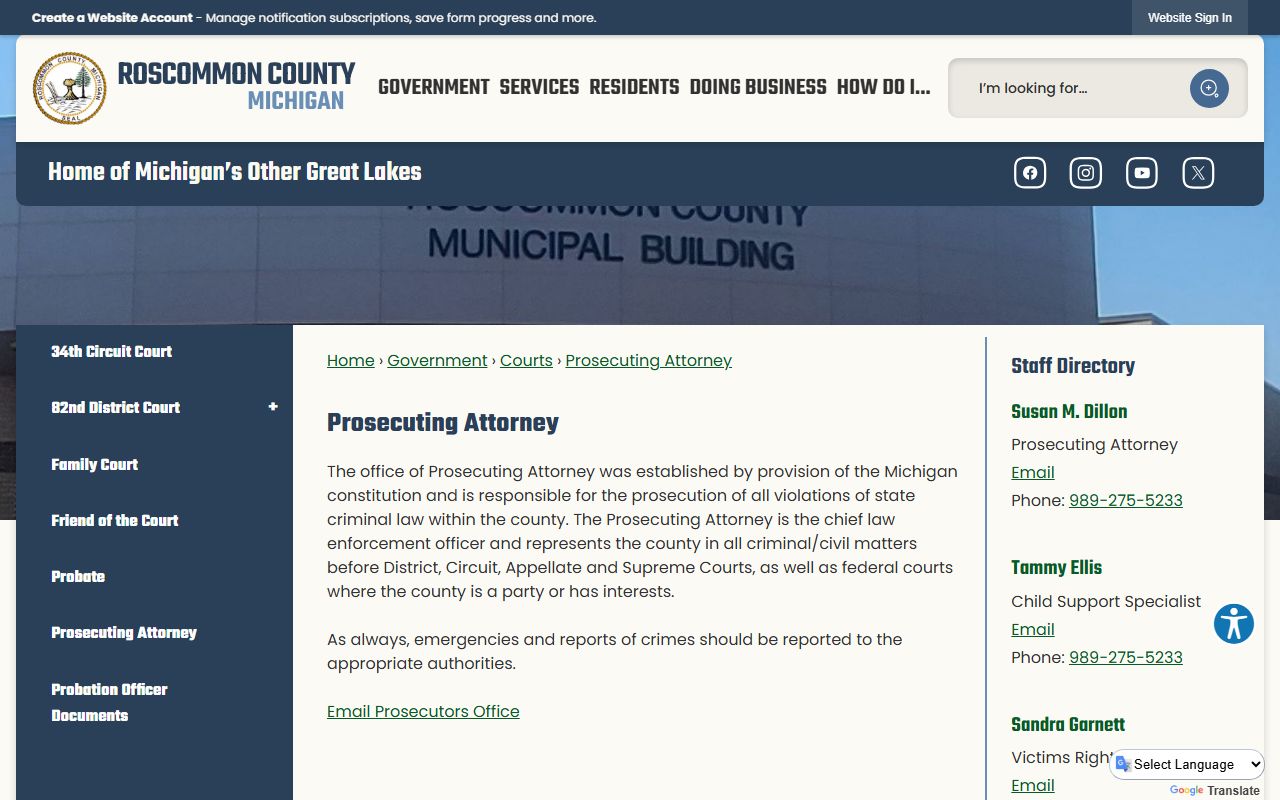
That office, not the arresting officer, controls the formal charge that appears in the Roscommon County court record.
How to Find Roscommon County Arrest Records
Roscommon County does not run its own public case-search database on its court pages. Public case lookup runs through the statewide MiCOURT Case Search portal. Charges and charge status show up there once a case is filed. Arrest and booking detail does not. That detail lives in the county jail roster instead. The court portal is where the filed charge, the case number, and the current status appear.
The Sheriff's Office explains how a police report, which can start a charge, is filed through county dispatch.
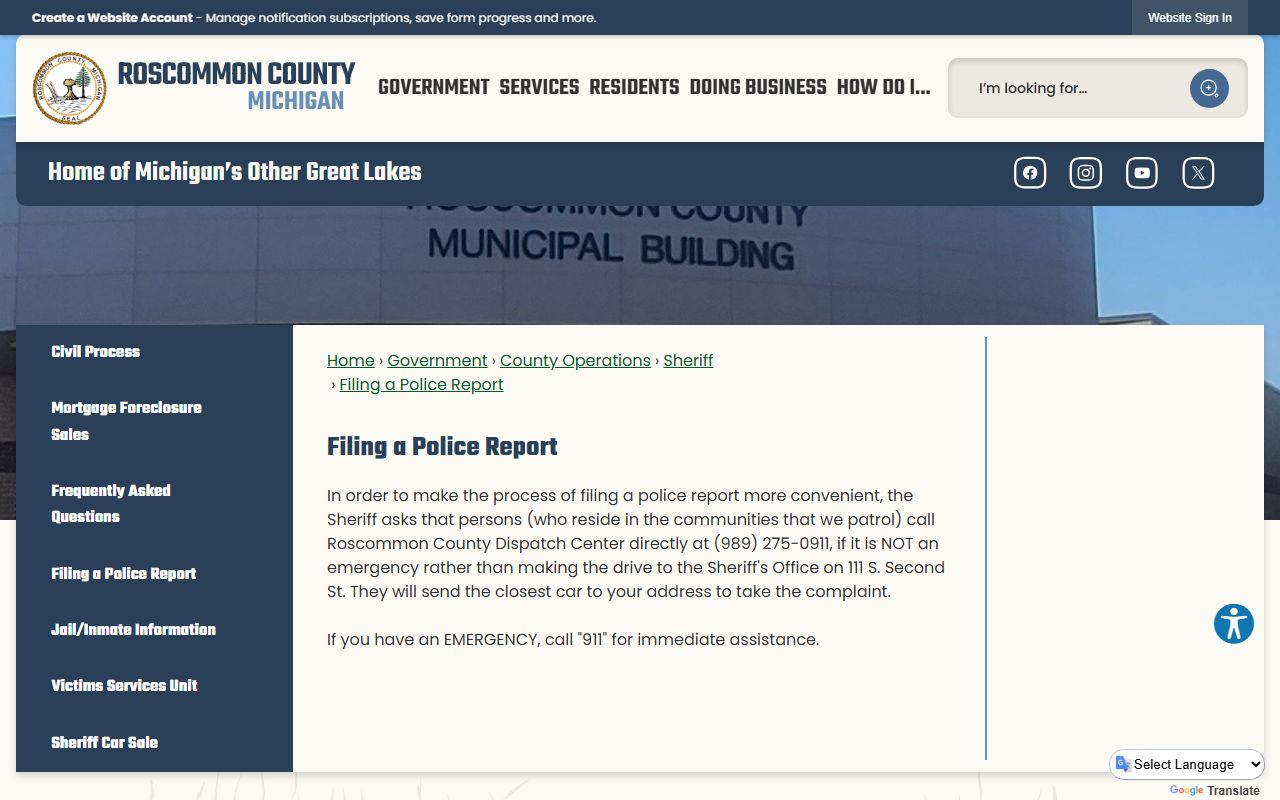
A police report is often the first document in the chain that ends with a filed Roscommon County charge.
- Open MiCOURT Case Search and pick the right court level.
- Search by the defendant's legal last name, or enter a known case number.
- Open the matching case and read the list of filed charges.
- Check each charge's statute code, severity level, and current status.
For a criminal history summary rather than one case, Michigan runs its own tools. The Michigan State Police ICHAT service returns public criminal history record information. It does not show warrant information. That is a key limit for anyone hoping a single lookup answers every question.
Note: A missing MiCOURT result does not prove no case exists, because some records are restricted or held only at the local court counter.
How Roscommon County Charges Get Filed
The charge record begins when the prosecutor files a charging document. In Roscommon County, the Prosecuting Attorney, Susan M. Dillon, files charges for state-law violations. The office Warrant Clerk, Kimberly Kersey, handles the warrant and charging paperwork at 989-275-5233. A booking charge listed at the jail is only a starting point. The formal charge is the one written into the charging document and filed with the court.
The county staff directory lists the prosecutor and the warrant clerk who process charges.
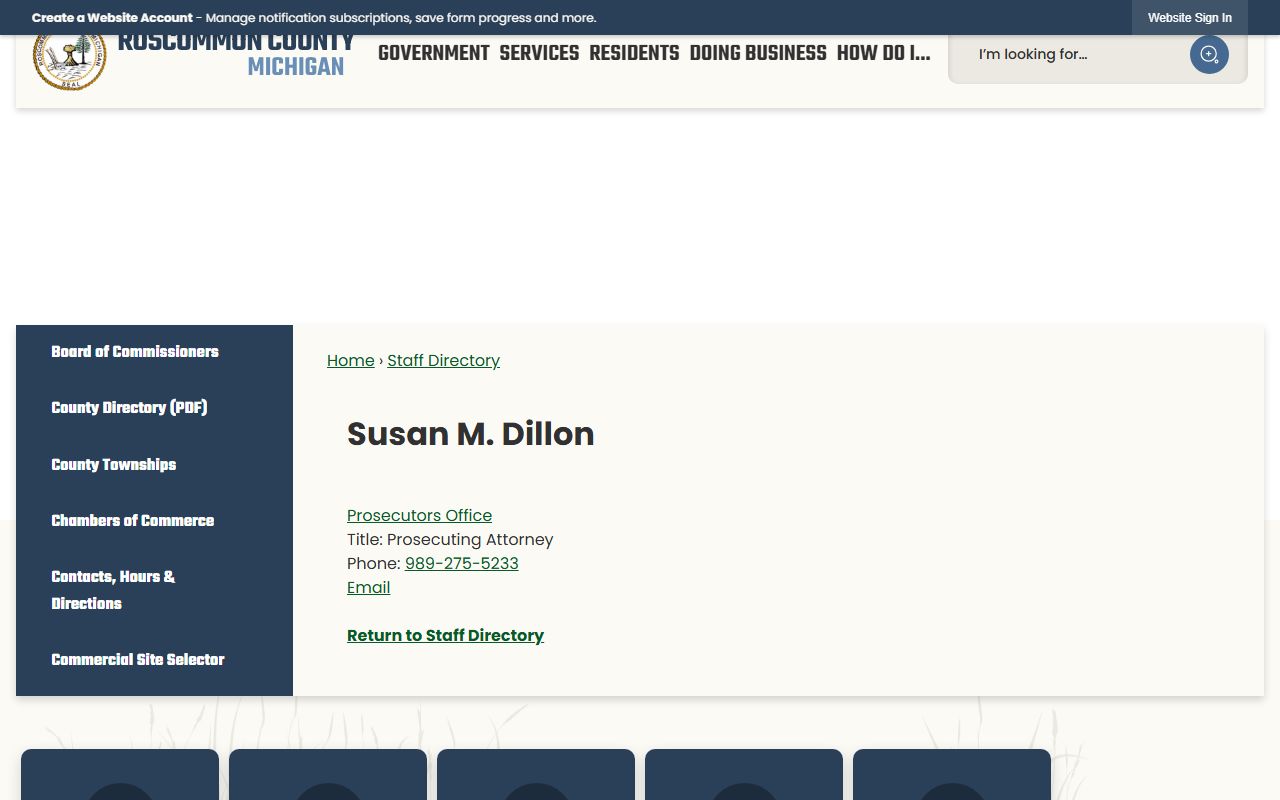
Naming the office that files a charge helps a reader trace a Roscommon County charge back to its source.
Michigan uses three main charging documents. A complaint is the most common starting point for misdemeanors. An information is the felony charging document used after a case is bound over to Circuit Court. An indictment comes from a grand jury and is used less often, mostly for serious felonies.
| Complaint | Information | Indictment | |
|---|---|---|---|
| Filed By | Officer / Prosecutor | Prosecutor | Grand Jury |
| Common For | Misdemeanors | Many felonies | Serious felonies |
| Starts | The case | The case | The case |
Roscommon County Charges vs. Convictions
A charge is an accusation. A conviction is a finding of guilt. The two are easy to confuse in a record, but they mean very different things. A person can be charged and later have every charge dropped. The charge still appears in the court file, marked with its status. Reading that status is the only way to tell an accusation from an outcome.
Important: A filed charge is not proof of guilt. Under Michigan law, a defendant is presumed innocent until a plea or verdict resolves the case.
| Charge | Conviction | |
|---|---|---|
| Stage | Accusation | Verdict or plea |
| Burden of Proof | Probable cause | Beyond reasonable doubt |
| Public Record | Yes | Yes |
Charge Status in Roscommon County Records
Charges rarely stay frozen. As a case moves, a charge can be amended, reduced, added, dropped, or dismissed. The status field in the record tells you where each charge stands. Reading it right keeps you from assuming an old booking charge is still active. It also explains why a case file can list a charge that no longer applies.
Some terms carry specific legal weight. Nolle prosequi means the prosecutor chose not to pursue the charge.
| Status | What It Means |
|---|---|
| Pending | The charge is filed and the case is still open and unresolved. |
| Amended / Reduced | The prosecutor changed the charge, often to a lower offense. |
| Dismissed | The court dropped the charge, and it is no longer being pursued. |
| Nolle Prosequi | The prosecutor formally declined to prosecute the charge. |
Note: A dismissed or reduced charge can still appear in the court file, because the record keeps the full history of how each charge changed over time.
Sealed vs. Expunged Roscommon Records
Michigan does not use the word "expunged" in its statute. The state term is "set aside." Setting aside a conviction removes it from ordinary public criminal history access. A person files SCAO form MC 227 in the court where the conviction happened. In Roscommon, that is District Court for eligible misdemeanors and Circuit Court for eligible felonies.
Sealing and set-aside are not identical. A sealed record is made nonpublic by court rule or order, while a set-aside removes an eligible conviction from public view. One more point trips people up. Setting aside a traffic offense does not erase it from the Secretary of State driving record. The state set-aside statute lays out who qualifies and how the process works.
| Sealed | Expunged | |
|---|---|---|
| Visibility | Hidden from public | Set aside and removed from public view |
| Law Enforcement | Limited access | Very limited access |
| Eligibility | By court rule or order, such as juvenile or protected files | Set-aside under MCL 780.621 for qualifying convictions after a waiting period |
Roscommon County Charge Codes and Levels
Every charge points to a specific statute or local ordinance. The code names the exact offense and its severity. Michigan sorts offenses into levels. Civil infractions are the lowest, covering most traffic and recreation tickets. Misdemeanors are criminal but lower level. Felonies are the most serious. One arrest can produce several separate charges, each with its own code and level.
A filed charge entry usually carries these fields:
- Charge description and statute or ordinance
- Charge level or classification
- Offense date and arrest date
- Arresting agency
- Bond amount and bond type
- Case number and court name
- Current charge status
The Roscommon County Sheriff's Office is the arresting agency named in many local charge entries.
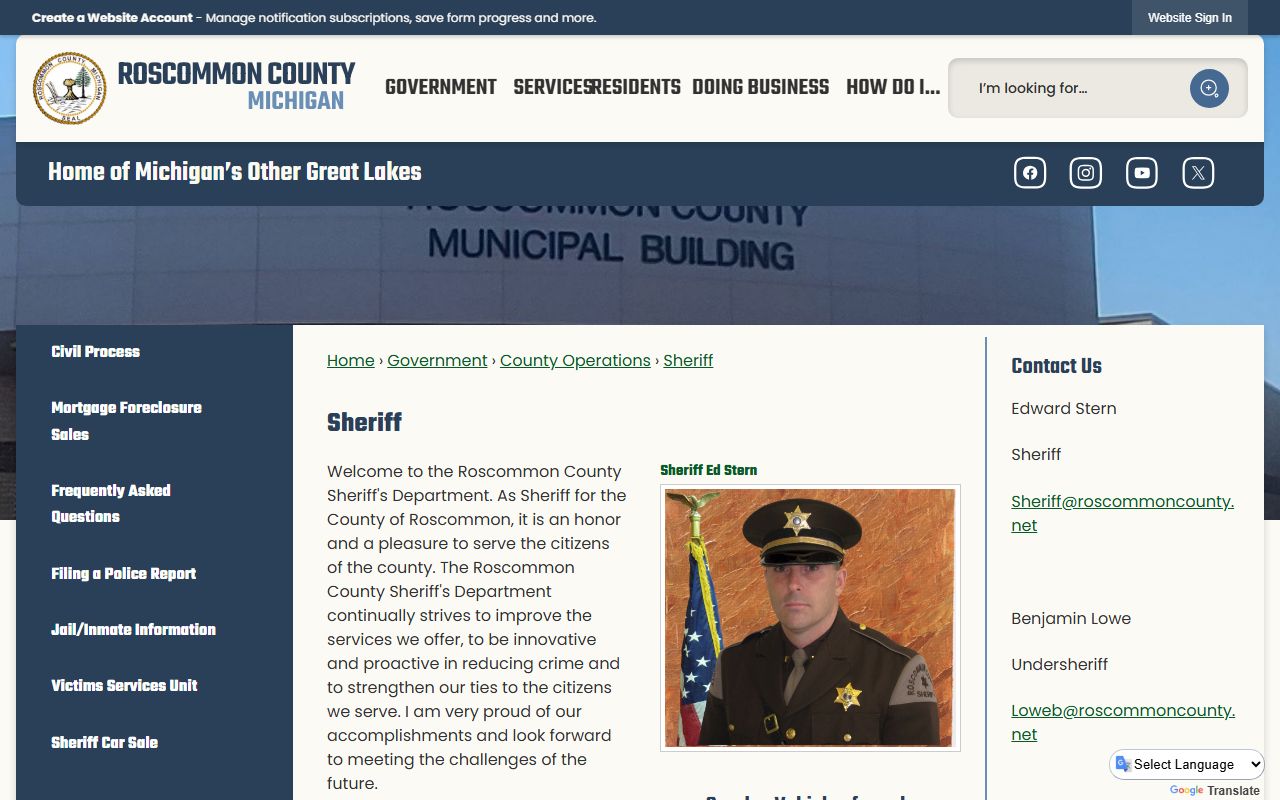
The arresting agency field ties a specific charge code back to the office that made the arrest in Roscommon County.
Statewide Charge and Criminal History Lookups
One case in MiCOURT is not a full background picture. For that, charges roll up into statewide systems. Michigan State Police ICHAT holds public criminal history record information for convictions across all 83 counties. Felonies and serious misdemeanors are reported by law by police, prosecutors, and courts. ICHAT does not include suppressed records, and it does not show warrant information.
Other state tools cover other angles. The Michigan Department of Corrections OTIS search tracks people under state supervision, including prisoners, parolees, and probationers. Federal charges are separate from county charges. Cases prosecuted at the federal level do not appear in county or state court systems at all.
The U.S. Attorney's Office for the Eastern District of Michigan prosecutes federal charges that never touch the county court file.
A person can face separate federal and Roscommon County charges from the same event, tracked in two different systems.
Note: ICHAT is a criminal history tool, not a warrant search, so an active warrant will not appear in an ICHAT result.
Background Check Considerations
Looking up a charge out of personal curiosity is different from running a background check for a job or a lease. Formal background checks are regulated by the federal Fair Credit Reporting Act, the FCRA. Consumer reporting agencies must follow strict rules on accuracy, notice, and permissible use. Casual public-record lookups do not carry those protections. They can also be incomplete or out of date, since charges change as a case moves.
Important: This site is not a consumer reporting agency under the FCRA, and its information may not be used for employment, tenant, or credit decisions.
Restricted Charge Records in Roscommon County
Not every charge is open to public lookup. Juvenile charges in the Family Division are restricted. Sealed and set-aside charges drop out of ordinary public access. Charges tied to an ongoing investigation may be withheld until a case is filed. Personal identifying details, like Social Security numbers and dates of birth, are redacted under the Michigan court rules that govern record access.
When a record is restricted, the county may still allow limited access to the right person. A party to the case, an attorney of record, or someone with a court order can often view what the general public cannot. The local court counter is the place to ask. Staff may require identification or proof of standing before releasing a restricted charge record.